



Basketball Court Dimensions: NBA, FIBA and Australian Court Sizes

Basketball court size changes depending on the level of play. Most Australian competitions, including the NBL, WNBL and Basketball Australia events, follow FIBA measurements, while the NBA and US schools use their own. This guide lists the official dimensions in metres and feet, so you can compare them or plan a backyard court.
Basketball Court Dimensions at a Glance
| Level | Length | Width | Three-point line | Free-throw line |
|---|---|---|---|---|
| FIBA (Australia, Olympics) | 28 m (91.9 ft) | 15 m (49.2 ft) | 6.75 m (22.15 ft) | 4.6 m (15.1 ft) from the backboard |
| NBA | 28.65 m (94 ft) | 15.24 m (50 ft) | 7.24 m (23.75 ft); 6.7 m (22 ft) in the corners | 4.57 m (15 ft) from the backboard |
| NCAA (US college) | 28.65 m (94 ft) | 15.24 m (50 ft) | 6.75 m (22.15 ft) | 4.57 m (15 ft) |
| US high school | 25.6 m (84 ft) | 15.24 m (50 ft) | 6.02 m (19.75 ft) | 4.57 m (15 ft) |
The ring is 3.05 m (10 ft) above the floor at every level.
FIBA Court Size (Used in Australia)
A FIBA court measures 28 m long and 15 m wide. The three-point line is 6.75 m from the basket, and the key (the painted lane) is 4.9 m wide. Local club, school and association competitions in Australia generally use this layout, although many older halls and school courts are slightly smaller.
NBA Court Size
An NBA court is 94 ft by 50 ft (28.65 m by 15.24 m). The three-point line is 23.75 ft from the basket at the top of the arc and 22 ft in the corners. The lane is 16 ft (4.88 m) wide, and the restricted-area arc has a 4 ft (1.22 m) radius.
College and High School Courts
NCAA courts match the NBA in length and width, but the three-point line is closer, at 22.15 ft (6.75 m). US high school courts are shorter at 84 ft (25.6 m) and use a 19.75 ft (6.02 m) three-point line.
Key Court Markings
- Centre circle: used for the opening tip-off, with a radius of about 1.8 m (6 ft).
- Key (free-throw lane): 4.9 m wide under FIBA rules and 4.88 m (16 ft) in the NBA.
- Three-point arc: distance depends on the competition level.
- Sidelines and baselines: mark the playing boundary.
- Ring height: 3.05 m (10 ft) everywhere.
Indoor vs Outdoor Courts
The dimensions are the same, but the surface differs. Indoor courts usually have timber or synthetic flooring for consistent bounce and grip. Outdoor courts are normally concrete, acrylic-coated asphalt or modular tiles chosen for durability and weather resistance. For an outdoor build, allow for a levelled base, a slight slope (around 1%) so water drains, and a weatherproof surface coating.
Half Court and Backyard Court Sizes
- FIBA half court: 14 m × 15 m (about 46 × 49 ft).
- NBA half court: 47 ft × 50 ft (14.33 × 15.24 m).
- Backyard or driveway court: a practical minimum is around 9 m × 12 m (30 × 40 ft), which fits a ring, a key and some room to shoot. Leave about 2 to 3 m of clear space around the court for safety.
Equipment for Practice
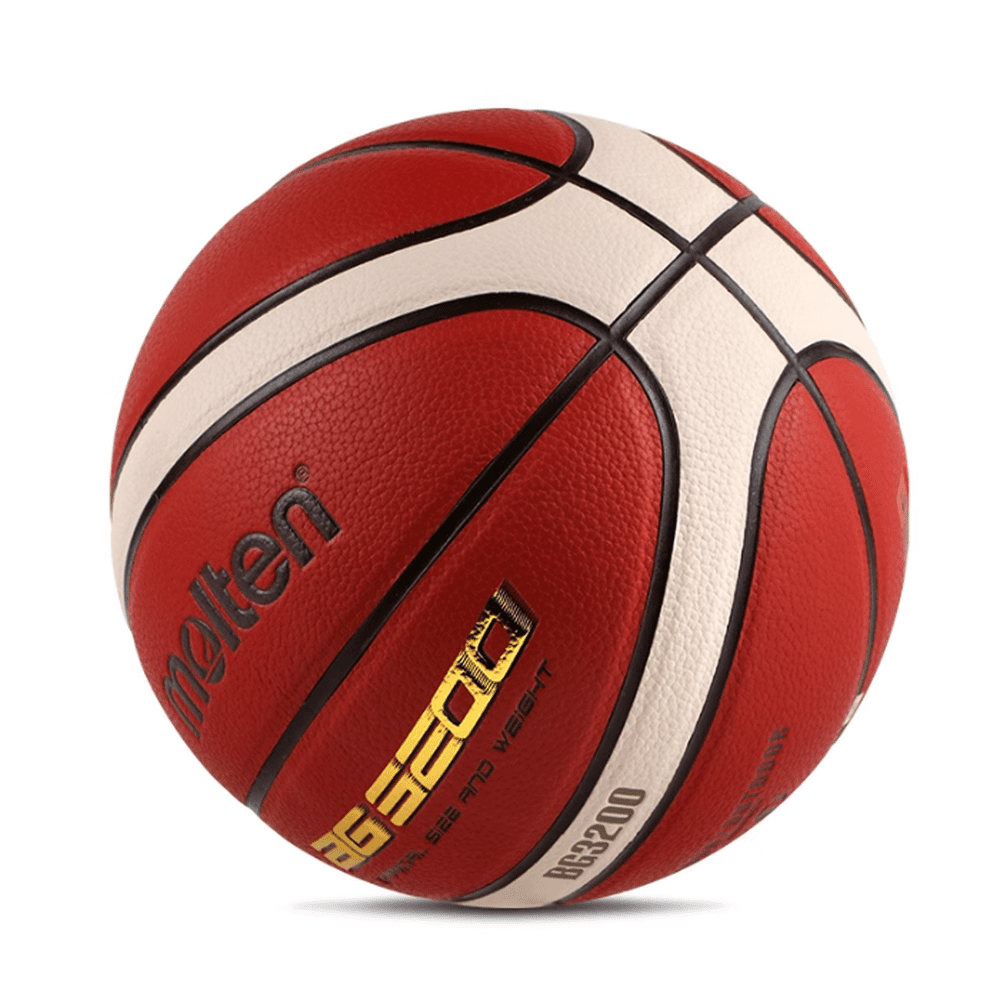
Once the court is sorted, the right ball makes a difference. A size 7 ball is used for men's and senior play, and size 6 for women's and junior play. We stock the Molten B7G3360 basketball, and for solo training there is the SIBOASI basketball rebound machine, which returns the ball automatically after each shot.
Summary
If you play in Australia, the 28 m × 15 m FIBA court is the standard to go by. The NBA court is slightly longer and wider, and US high school courts are shorter. Measure your space against the table above before you build or mark out a court.
Leave a comment